

Finding your distribution cheat code
The hardest thing about software startups isn't the software

A while back, technical feasibility was the hardest thing about building a startup. With the development of cloud infrastructure, development frameworks, and the advent of AI, that’s no longer the case. “Can the software be built” is no longer a valid question for 99% of startups. You can build software faster and better than ever before. There might be a question of “who is the right person to build this software,” but not a question of whether or not it can be built. The answer is an easy “yes.”
Distribution has always been challenging for software startups, but it has become exponentially harder as software has become easier and easier to build. As the SaaS gold rush has happened, more and more competition has entered the market and the noise is greater than ever. Making the product available is no longer enough.
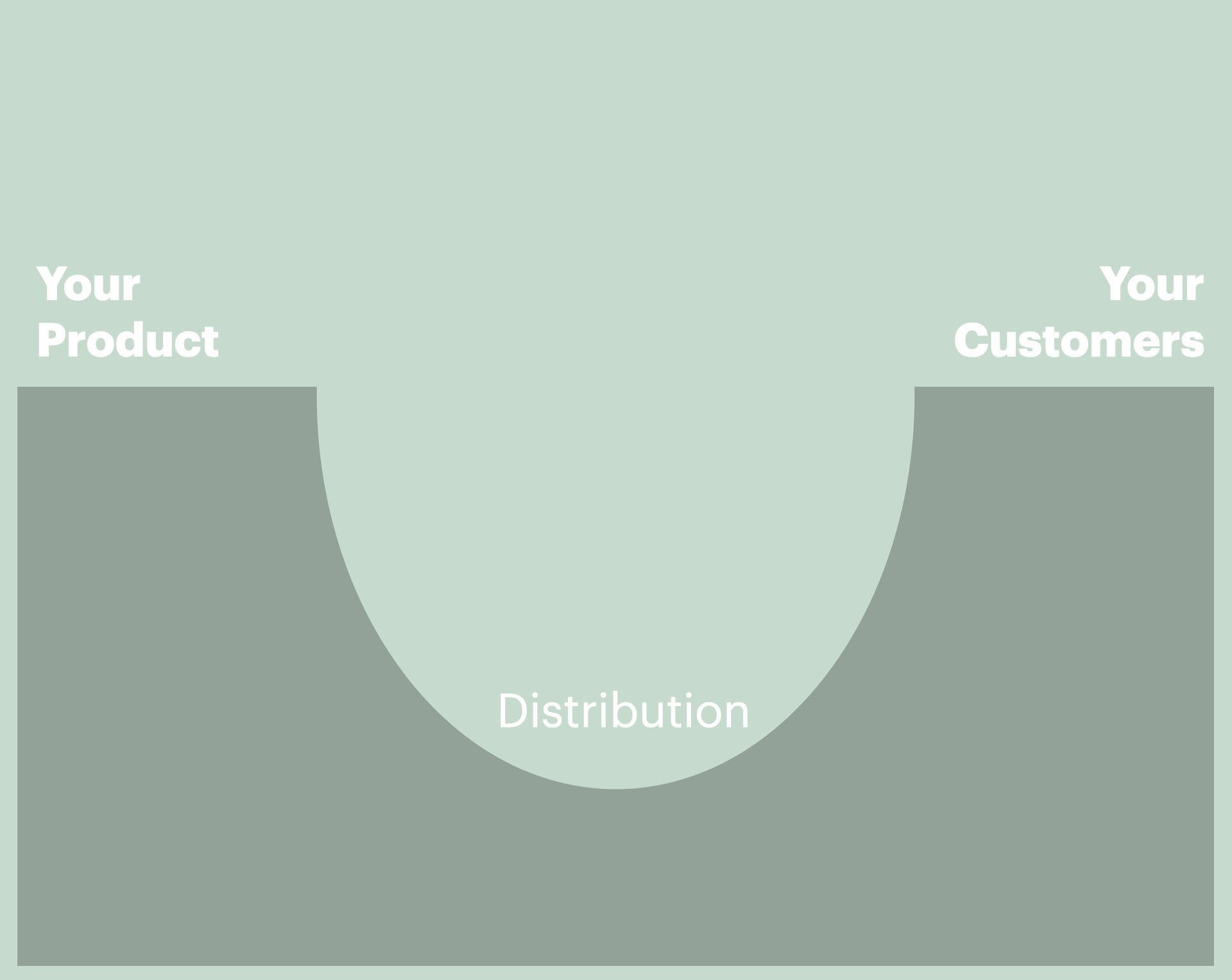
Once upon a time you could count on marketplaces or platforms for distribution. In the early days of the App Store, you could launch a new product and expect Apple to put it front of users. That’s no longer the case. There are now millions of apps on the App Store and 68.7% have less than 1000 downloads.
You used to be able to pay your way to distribution on Google or Facebook, but those channels have become so competitive and crowded that it’s no longer a viable distribution method.
Even influencer marketing has become less productive. You used to be able to flip $100 to a bunch of micro-influencers and see immediate ROI. That’s no longer the case as the price tag has gone up along with the competition.
SEO? Only if you have a long time and a lot of patience to generate great content and a bazillion backlinks.
What is distribution?
Before we go too far, let’s first answer the question–“what is distribution?”
Distribution is simply the strategies, methods, or channels that get your software in front of people.
Examples of distribution methods:
Email outreach
Cold calling
App marketplaces
Resellers
Bundled products
Affiliate/Referral
Influencer marketing
Events
Advertising
Network effects
Product-led growth
White label
So, Josh, I could just put my app on the app store and show up at a conference, that would be how I achieve distribution, right?
That’s a great question. While technically, you are making the software available and getting in front of potential customers, you most likely haven’t found a successful distribution method.
As discussed earlier, making the product available is no longer enough. When Andrew Chen or Mark Andreessen talk about getting distribution being the most important thing, what they mean is finding a successful method of distribution.
In order to find a successful method of distribution, it must have three qualities
Reliability - You can reliably reproduce your desired action. Ex: Every time you post a new video, it drives 2-3% of viewers to your website.
Profitability - You make more than you spend. Ex: $200 in ad spend produces 5 new customers with a $250 ARPU (Average Revenue Per User)
Scalability - You can do this over and over as many times as you want without diminishing returns.
So, when we talk about distribution, we’re not really talking about how you’ll make your product available. That’s easy. What we’re talking about is finding a distribution cheat code. That’s hard.
Distribution cheat code
To build a successful startup in today’s world, you have to find a distribution cheat code. It’s no longer possible to succeed without one. I can’t think of a recent example of a successful startup that didn’t have one.
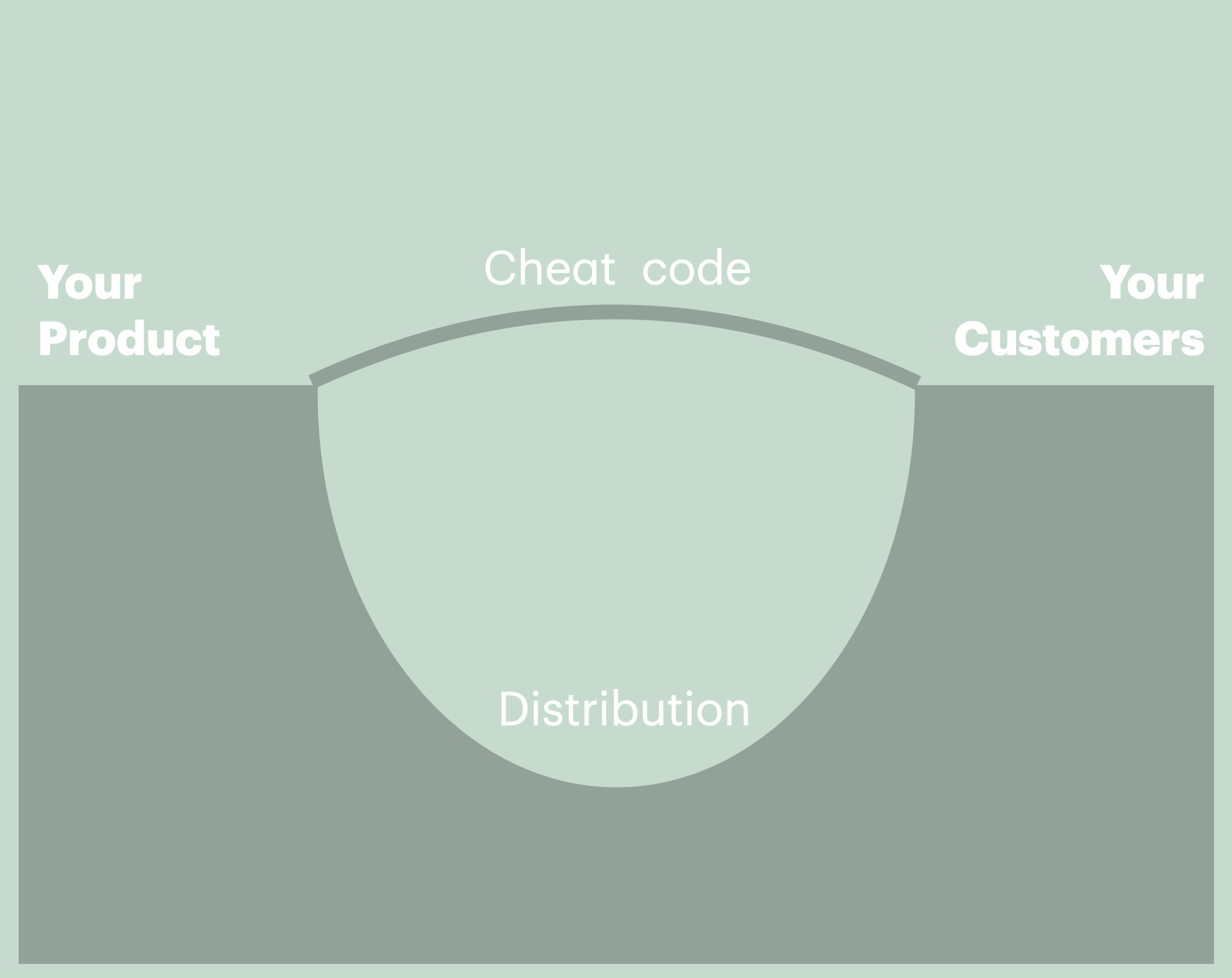
What does a distribution cheat code look like?
“I have 1 million subscribers on my YouTube channel about my core product offering”
“We own 9 Facebook groups totaling 240k members of our target market”
“I’ve spent 17 years in this industry and have close relationships with all of our major partners and customers.”
“We have a partnership with Hubspot to be their exclusive data enrichment partner”
“Our sister product has over 10 million users that we can cross promote to”
“We have a vetted list of 150k of our target customers”
“We acquired a content site that gets 500k organic visitors from our target market”
“I’m one of the top three thought leaders in the industry and am a keynote speaker at every conference.”
“Larry Page is my uncle”
Notice any patterns here? It’s about owning something that no one else owns or can gain access to. It can be a relationship, asset, or an audience.
What if I’m just starting out and don’t have any relationships, assets, or audiences? Get one. Or get them all.
In fact, finding your distribution cheat code is so important that you might be better off spending time developing it than developing your product. Especially if you’re a first time founder and plan to raise venture capital. I don’t even take a pitch that doesn’t have some sort of distribution cheat code.
Now, I’m not really saying spend years developing your distribution cheat code before you build a product. But…weeks? months?
I have many great product ideas that I would love to build, but haven’t because I can’t find a distribution cheat code. You can find many of them here in my Substack under “Product Ideas of the Day” :).
Work backwards
If you’re in the product ideation phase, start with distribution and work backwards. Instead of thinking about what problems to solve or products to build, start with any distribution cheat codes you have.
Do you have an audience?
Do you have any key relationships?
Do you own an asset that you can leverage?
Could you partner with someone who does?
I bet if you really think on it, you can find a couple cheat codes lying dormant that might just take a little dusting off. Maybe it’s an old relationship that you could rekindle. Or maybe it’s a friend who owns an asset that you could partner with.
It’s highly likely that if you have a dormant distribution cheat code, that you already have insight or passion around problems that could be solved in this space (founder/market fit).
Once you find your distribution cheat code, start ideating on the problems that these people encounter. How could you solve them better? What needs are unmet? This is the beginning of your recipe for success.
The #1 pitch deck upgrade
In my opinion, the best thing you can do for any pitch is nail down your distribution cheat code as early as possible in the pitch.
Without: “We’re developing a STEM toy subscription box” (yawn)
With: “We’re developing a STEM toy subscription box, and my name is Mark Rober” (where do I sign?!?!)
If you have a solid distribution cheat code, but can’t quite figure out the the product piece. Hit me up on Volley I’d love to ideate with you.